 Reviews

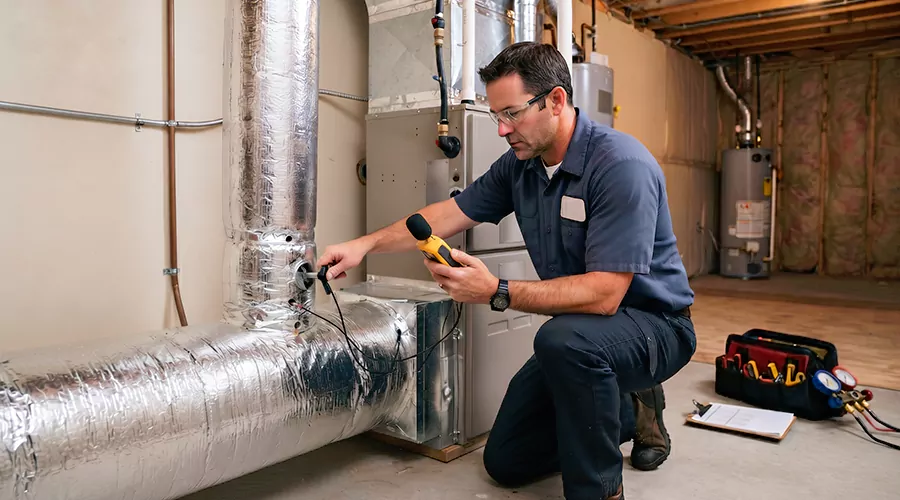
Air balancing is the process of measuring and adjusting airflow so each room receives the amount of conditioned air it needs. Professional whole-home service typically costs about $750 to $2,000 in 2026. Smaller adjustments can cost less when the duct system is already in good condition.
One bedroom that stays hot does not automatically mean the air conditioner is too small. The problem may be how air is distributed through the duct system.
Balancing can improve uneven temperatures without replacing major HVAC equipment. It cannot fix every comfort problem because damaged ducts or incorrect equipment sizing may require separate work.
What Does Air Balancing Mean?
Air balancing measures how much conditioned air reaches different areas of a home. The process compares actual airflow with the amount each room should receive. Dampers or blower settings can then be adjusted so rooms receive a more appropriate share of the system's total airflow.
- Air is measured in cubic feet per minute.
- This measurement is often shortened to CFM.
- A larger room usually needs more airflow than a small bathroom.
- Rooms with large windows may also need different airflow.
- An upstairs bedroom can have a different cooling load than a downstairs hallway.
Professional testing looks beyond whether air simply comes from the register. The goal is to determine how much air actually arrives. That difference explains why two vents can feel similar by hand while delivering very different airflow.
How Much Does Professional Air Balancing Cost?
Professional whole-home service commonly costs about $750 to $2,000 in 2026. Some contractors price the work at roughly $75 to $150 per damper. The final total depends on home size and the number of registers that require measurement or adjustment.
A practical cost guide is:
Cost and Service Planning Table
| Work performed | Typical 2026 cost |
|---|---|
| Basic homeowner checks | $0 to $60 |
| Filter replacement | $10 to $60 |
| Individual damper adjustment | $75 to $150 |
| Whole-home professional balancing | $750 to $2,000 |
| Additional duct repair | Separate charge |
| Major duct redesign | Can exceed $1,000 |
The quoted price should state whether airflow measurements are included.
Opening and closing dampers by guesswork is different from measuring actual CFM.
- A larger home takes longer because more registers must be tested.
- Multiple HVAC systems also increase the amount of work.
- Poor attic access can make damper adjustments more difficult.
Why Do Some Rooms Get More Air Than Others?
Uneven airflow occurs when the duct system creates different resistance between rooms. Long duct runs can receive less air than short runs. Crushed flexible ducts can also restrict flow. Incorrect damper positions or poor return-air pathways can create similar comfort problems. Regular air duct cleaning helps remove accumulated debris that can worsen these imbalances, ensuring that clean, unobstructed ducts deliver air more evenly throughout your home.
Several conditions can affect distribution.
- A distant bedroom may have a long branch duct.
- Another room may sit close to the air handler.
- The nearby room can receive too much airflow.
- The distant room can receive too little.
Flexible ducts create another issue.
- A sharp bend increases resistance.
- Severe sagging can also reduce airflow.
- Closed interior doors can affect return airflow in some homes.
- That pressure difference can make supply performance worse.
Balancing works best after these physical problems are identified. Adjusting a damper cannot repair a crushed duct.
How Is Professional Airflow Balancing Done?
Professional balancing begins by measuring airflow at supply and return registers. A technician may use an airflow hood and pressure instruments. Those measurements are compared with the intended airflow for each room. Dampers or blower settings are then adjusted before the system is measured again.
The process may include:
- Checking the air filter.
- Inspecting visible duct conditions.
- Measuring total system airflow.
- Measuring airflow at each supply register.
- Checking return-air performance.
- Reviewing damper positions.
- Adjusting airflow distribution.
- Measuring the registers again.
- Checking system pressure.
- Recording final airflow values.
Professional testing matters because changing one branch can affect another. Closing one damper sends more available air toward other branches. The technician may need several rounds of adjustment. The final result should be measured rather than judged only by room temperature.
When Is Air Balancing HVAC Service Needed?
Air balancing HVAC service is most useful when heating or cooling works but temperatures remain uneven between rooms. It can also help when one area receives very strong airflow while another receives very little. Persistent comfort differences after filter and register checks deserve closer airflow testing.
Common situations include an upstairs floor that stays warm. A back bedroom may never cool properly. Another room may become uncomfortable because it gets too much supply air. These symptoms are especially meaningful when the thermostat area feels comfortable. That pattern suggests the equipment may be producing conditioned air correctly.
The distribution system may be delivering it unevenly. Balancing becomes less useful when airflow is weak everywhere. Whole-system airflow loss can point toward another problem.
What Are the Signs Your HVAC System Is Out of Balance?
An unbalanced system usually creates room-specific comfort problems rather than complete heating or cooling failure. Temperature differences between similar rooms are a common clue. Strong airflow from one register combined with weak airflow elsewhere also suggests that the distribution system deserves inspection.
10 Warning Signs of an Unbalanced System
- One bedroom remains warmer than nearby rooms.
- Upstairs temperatures differ sharply from downstairs.
- One vent produces much stronger airflow than others.
- A distant room receives very little air.
- Some rooms reach the thermostat setting much faster.
- Interior doors change airflow noticeably when closed.
- Rooms become uncomfortable even when the main thermostat is satisfied.
- Airflow problems continue with a clean filter.
- The HVAC system runs normally but comfort remains uneven.
- Previous duct repairs changed room temperatures.
Temperature differences alone do not prove that balancing is required.
- Solar heat can make one room warmer.
- Poor insulation can create the same complaint.
- Windows can also have a major effect.
That is why airflow measurements are useful.
How Does an Airflow Problem Progress?
A distribution problem can begin as a minor room-to-room comfort difference. Continued restriction can make the system run longer because the thermostat receives an incomplete picture of comfort throughout the house. Severe duct restrictions can eventually create larger airflow or equipment-performance problems.
Problem Progression Planning Table
| Stage | What you notice | Possible response | Typical cost |
|---|---|---|---|
| Early | One slightly warmer room | Filter and vent check | $0 to $60 |
| Developing | Weak airflow at one register | Duct inspection | $100s possible |
| Distribution issue | Several uneven rooms | Professional balancing | $750 to $2,000 |
| Physical damage | Crushed or disconnected duct | Duct repair | Additional cost |
| Design problem | Persistent poor distribution | Duct modification | $1,000+ possible |
| Major issue | Whole system has low airflow | Full HVAC diagnosis | Depends on cause |
Balancing is most cost-effective when the duct system is physically sound. A badly damaged system needs repair first. Otherwise the technician may be trying to balance air through ducts that cannot carry the required airflow.
Can Air Balancing Fix Hot and Cold Rooms?
It can fix hot or cold rooms when uneven airflow is the main cause. It cannot overcome major insulation problems or extreme solar heat gain. A damaged duct also needs repair before adjustment can work properly. The correct solution depends on why the room temperature differs.
- Imagine one bedroom needs 120 CFM.
- It currently receives 70 CFM.
- Another room needs 100 CFM.
- That room receives 150 CFM.
Redistributing part of the excess airflow can improve both rooms. Now consider a bedroom with poor attic insulation. Increasing supply airflow may help somewhat. It does not correct the heat entering through the ceiling. The same applies to large west-facing windows. Balancing should therefore be based on airflow and room load. Comfort alone cannot identify the cause.
What Safe DIY Airflow Test Can You Do?
A homeowner can perform a simple comparison without opening HVAC equipment. Start with a clean filter and fully open supply registers. Run the system normally. Compare airflow from similar registers using a light tissue. Then record which rooms remain noticeably weaker or warmer.
Follow these steps:
- Check the filter.
- Replace it if heavily loaded.
- Open all supply registers fully.
- Make sure return grilles are not blocked.
- Run the HVAC system.
- Compare similar supply vents.
- Record rooms with noticeably weak airflow.
- Compare room temperatures after one operating cycle.
- Do not use an open flame near a register.
- Do not climb through an unsafe attic to reach dampers.
- Avoid making large damper changes when you do not know which branch each damper controls.
Small observations are more useful than random adjustments. Your goal is to identify a pattern.
Should You Close Vents to Balance Airflow?
Closing room registers is usually a poor substitute for proper balancing because it can increase pressure inside the duct system. Small adjustments may change room comfort but closing many registers can reduce total airflow. Branch dampers are generally a better place to adjust distribution. A supply register controls air at the end of the duct. A balancing damper controls the branch farther upstream. That distinction matters.
Partially closing one problem register may be reasonable as a temporary test. Closing many registers can create excessive resistance. Reduced airflow can affect heating and cooling performance. It can also make duct leakage worse. A professional should evaluate the system when major adjustments are required.
When Will Air Balancing Not Fix the Problem?
Balancing cannot correct every room-temperature complaint because airflow may not be the real cause. Poor insulation or damaged ducts require different solutions. Incorrect equipment sizing can also create comfort problems. A technician should identify those conditions before treating damper adjustment as the complete answer.
Balancing may not solve:
- Disconnected ducts
- Severely crushed ducts
- Major duct leakage
- Incorrect duct sizing
- Dirty evaporator coils
- Weak blower motors
- Severely restricted filters
- Poor insulation
- Large solar heat gain
- Incorrect HVAC capacity
Suppose airflow is weak at every supply register. Redistributing the existing air cannot create more total airflow. The blower problem must be diagnosed first. The same principle applies to duct leakage. Balancing air that never reaches the room does not solve the underlying loss.
Is Air Balancing the Same as HVAC Zoning?
No. Balancing adjusts airflow within one operating system while zoning actively controls different areas with thermostats and motorized dampers. Balancing is usually simpler. Zoning can provide independent temperature control but requires additional equipment and a system designed to handle changing airflow.
A balanced house can still have one thermostat. Different rooms simply receive appropriate airflow. A zoning system divides the house into controlled areas. Each zone can request heating or cooling separately. Motorized dampers open or close based on those requests.
Zoning is therefore a more complex solution. It may help homes with very different floor conditions. It should not be the first answer to a crushed duct or blocked return. Basic airflow problems should be identified first.
When Should You Call a Professional?
Professional testing is appropriate when uneven temperatures continue after simple filter and register checks. It is especially useful when several rooms have different airflow levels. A technician can measure CFM and system pressure rather than guessing from how strong a vent feels.
Call when one room consistently differs by several degrees. Professional evaluation is also useful after duct modifications. New HVAC equipment can create another reason for testing. The blower settings may differ from the previous system. A technician can determine whether each branch receives its intended airflow.
Professional tools provide more useful information than hand-feel tests.
- A flow hood measures register airflow.
- Pressure measurements help identify excessive resistance.
- The technician can then determine whether adjustment or repair is needed.
How Can You Prevent Airflow From Becoming Uneven?
Good airflow begins with keeping the system free from avoidable restrictions. Filters should be checked regularly. Supply and return grilles should remain open. Accessible ducts should not be crushed by stored items. Changes in room comfort should be investigated before they become long-term problems.
- Check filters every one to three months.
- Actual frequency depends on filter type and household conditions.
- Do not place furniture over return grilles.
- Avoid stacking storage on flexible attic ducts.
- Watch for changes after remodeling.
- A new wall or closed doorway can alter airflow patterns.
- Inspect comfort after HVAC replacement too.
Professional balancing usually does not need to happen every year when the system remains unchanged. Consider retesting after major duct work. Testing is also useful when a persistent room problem develops.
Conclusion
Air balancing helps correct uneven room temperatures by measuring and adjusting how conditioned air moves through the duct system. Professional whole-home work commonly costs $750 to $2,000 in 2026. It works best when ducts are intact and the HVAC equipment is operating correctly. Before scheduling service, check your filter and record which rooms receive the strongest and weakest airflow during one normal cycle.
Frequently Asked Questions
Professional whole-home balancing commonly costs about $750 to $2,000 in 2026. Some projects are priced around $75 to $150 per damper.
A typical residential project can take several hours. Larger homes require more time because each supply and return opening may need measurement and adjustment.
You can check filters and compare airflow safely. Minor register adjustments are possible. Full balancing is more accurate when actual airflow is measured with professional instruments.
It may reduce unnecessary runtime when poor distribution causes the HVAC system to operate longer. Actual savings depend on the cause of the original airflow problem.
No. Different rooms require different amounts of conditioned air. Room size and heat gain affect how much airflow each space needs.
It is not normally an annual service. Consider testing after duct changes or HVAC replacement. It is also useful when persistent hot or cold rooms develop.